Why Does My Preschooler Talk to Themselves While Playing?
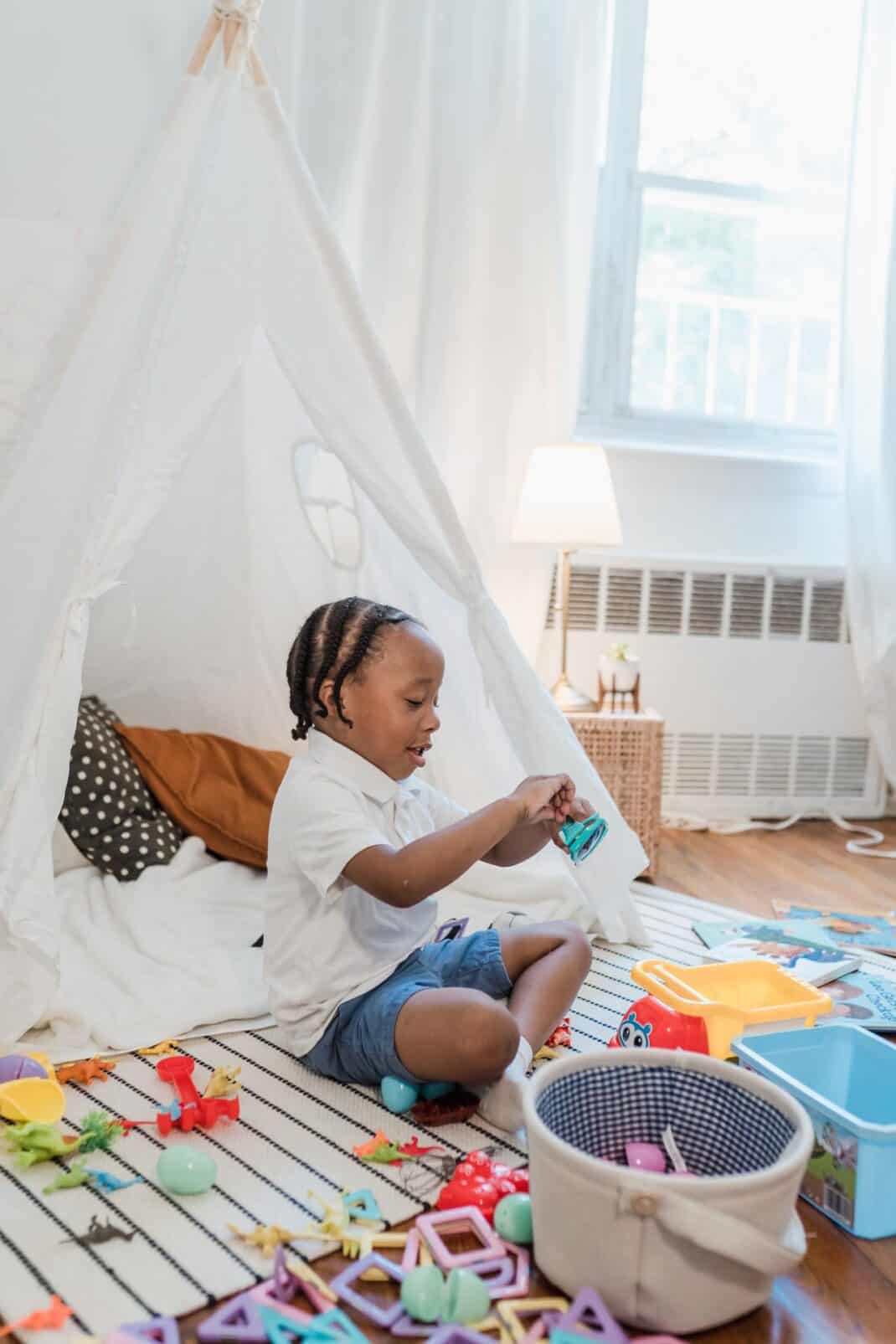
If you have ever listened to your preschooler play independently, you may have heard an entire conversation taking place, even when no one else is around. They might narrate what their toys are doing, give themselves instructions, ask and answer their own questions, or create conversations between imaginary characters.
While it can sometimes catch parents by surprise, talking to themselves during play is a common part of early childhood development. In fact, this type of self-talk can play an important role in how young children think, learn, solve problems, and process their experiences.
Why Do Preschoolers Talk to Themselves?
Young children are still developing the ability to organize their thoughts internally. Adults can quietly think through a problem in their heads, but preschoolers often express that thinking out loud.
You might hear your child say things like, “This piece goes here,” while completing a puzzle or “First I need the blue one” while building with blocks. By putting their thoughts into words, children can work through what they are doing one step at a time.
As children grow, much of this self-talk gradually becomes internal thought.
Self-Talk Can Help with Problem-Solving
Talking out loud can be particularly useful when a child encounters a challenge. Whether they are figuring out how to build a taller tower, deciding where a puzzle piece belongs, or working through an imaginary scenario, self-talk gives them a way to organize their ideas.
Children may even repeat instructions they have heard from parents or teachers. A child putting away toys, for example, might remind themselves where different items belong. This is one way children begin using language to guide their own actions.
Pretend Play Encourages Language Development
Sometimes what sounds like self-talk is actually part of an elaborate imaginary world.
During pretend play, children may become teachers, doctors, chefs, parents, superheroes, or characters they have invented themselves. They may speak for several different toys or act out conversations they have observed in everyday life.
These playful conversations give children opportunities to practice vocabulary, experiment with sentence structure, tell stories, and express ideas. They can also help children make sense of experiences by recreating familiar situations through play.
Self-Talk Can Support Emotional Development
Children do not always have the words to explain exactly how they are feeling. Play and self-talk can provide another way for them to process emotions and experiences.
For example, a child might recreate a classroom experience with stuffed animals or reassure a toy using words that a trusted adult has previously used with them. These moments can give children a safe way to explore feelings and practice responding to different situations.
Should Parents Encourage Self-Talk?
There is usually no need to discourage a preschooler from talking to themselves while they play. Instead, give your child plenty of opportunities for open-ended play where they can use their imagination freely.
You can also support language development by joining their play when invited, asking occasional open-ended questions, reading together, and having conversations throughout the day. At other times, simply allowing your child to direct their own play can give them valuable space to think and explore independently.
Learning Through Play at Les Enfants
What may sound like a preschooler simply chatting away to themselves can actually be an important part of learning. Through self-talk and imaginative play, children can practice language, work through challenges, explore emotions, and develop new ideas.
At Les Enfants, we recognize how valuable play is to early childhood development. By giving children opportunities to explore, imagine, communicate, and problem-solve, we help encourage skills that support learning both inside and outside the classroom.
For more resources and helpful tips for supporting your preschooler’s development, visit our blog page.
Related Posts
All Posts
How Long Does It Take for a Child to Adjust to Preschool?
What to Do If Your Child Doesn’t Want to Go to Preschool: Tips for Parents